How to check a grey ramp without a full IT8 chart
Without a full IT8 you cannot issue a complete characterisation file or a G7 certificate. In process you can still read a short gray ramp: paper white, 25%, 50%, 75%, and black. If 50% is clearly red or green, pull the three colours first; do not wait for the full chart. That short ramp is not a claim that you have aimed a data set.
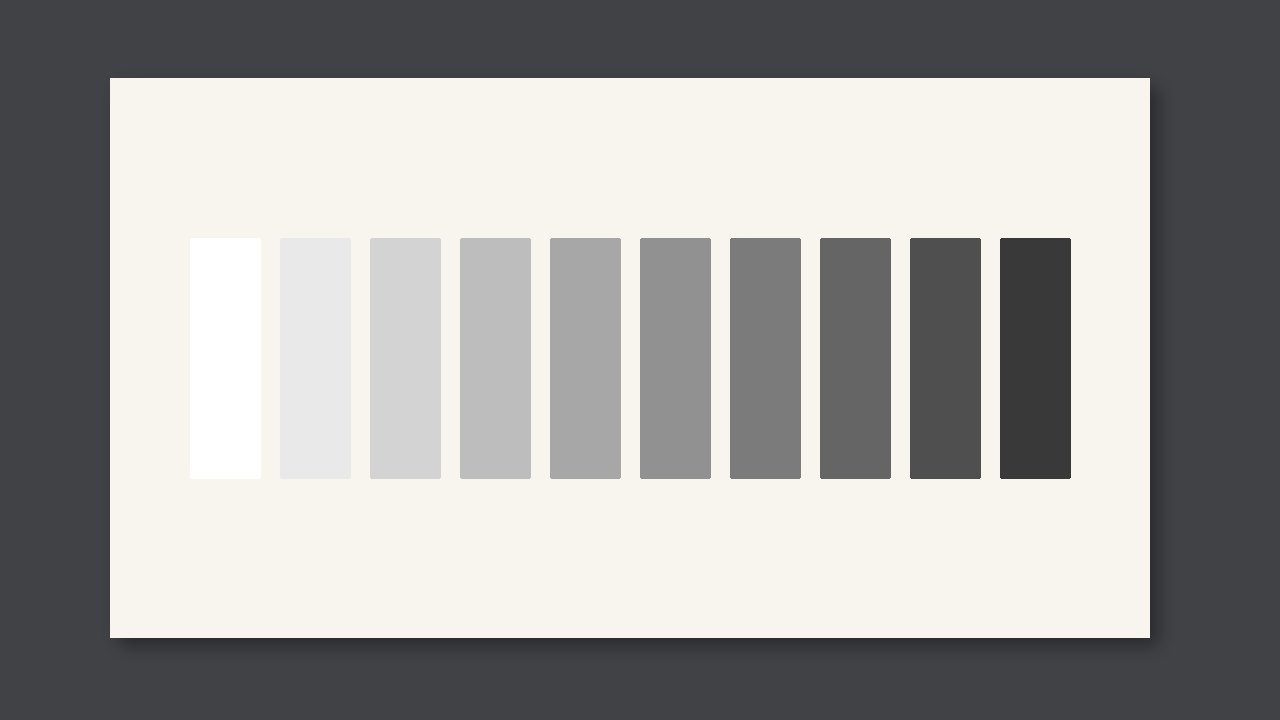
Without a full IT8 you cannot issue a complete characterisation file or a G7 certificate. In process you can still read a short gray ramp: paper white, 25%, 50%, 75%, and black. If 50% is clearly red or green, pull the three colours first; do not wait for the full chart. That short ramp is not a claim that you have aimed a data set.
What the short ramp can answer
Whether gray is neutral is how far a* and b* sit from 0. 50% shows a cast first. 25% tells you if the highlight leans together; 75% tells you if the shadow leans another way. Paper white is read alone so paper colour is not called ink. A black ramp, if you have one, shows whether single black and three-colour gray walk apart.
It cannot answer the full gamut, and it cannot answer every spot. So the press can use it to decide whether to stop and pull ink. The lab cannot issue “matched this CRPC” from it.
How to use the readings
| On the short ramp | Judgment you can make | Judgment you cannot make |
|---|---|---|
| a* and b* at 50% | Gray is obviously off | The whole G7 passed |
| 25% and 75% | Whether the cast is only in the middle | Every point on the curve |
| Only paper white and solids | Almost no view of gray | Do not invent a midtone |
When you record, write
- That this is a short ramp, not an IT8.
- Lab* at 50%.
- When a certificate is needed, print the full chart. Do not fill it from the short ramp.