When resolution is short, which fails first: fine type or pinholes
Which one disappears first depends on how many pixels it occupies, not on the name fine type or pinhole. Strokes at 1 to 2 pixels make fine type break first. A pinhole under about 3 pixels disappears first. One dpi cannot promise both. Write the more pixel-hungry of the two into the requirement.
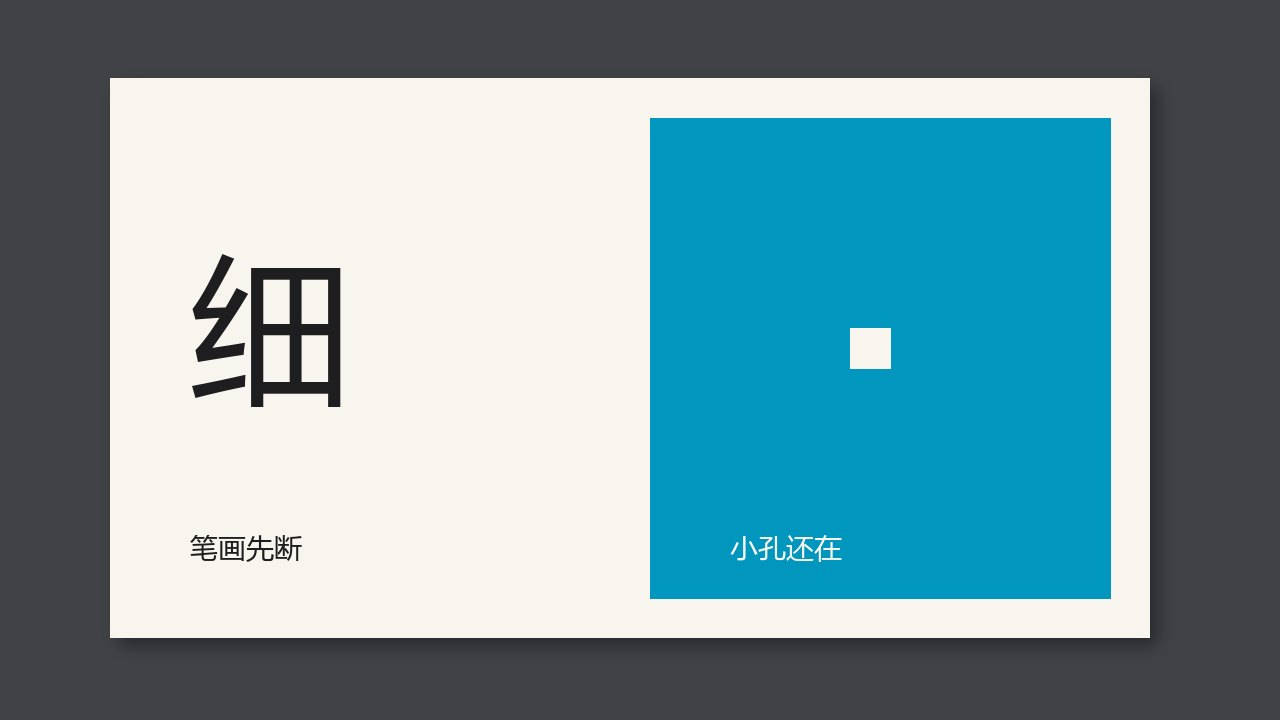
Which one disappears first depends on how many pixels it occupies, not on whether it is called fine type or a pinhole. When a stroke is down to 1 or 2 pixels, the fine type breaks first. When a pinhole is under about 3 pixels, the pinhole disappears first. One dpi cannot promise both at once. Write into the requirement whichever of the two defects uses more pixels.
The two failures are not the same
When fine type fails, strokes join or break. The characters are still there, but they can no longer be read. When a pinhole fails, the bright spot is simply gone, and the solid around it looks complete. So when resolution is only just short, the type may fail while the hole is still there, or the hole may vanish while the heavy type is still there. Put one sample of each on the web and look at top press speed.
Do not use a pass on 6-point type to prove that a 0.1 mm pinhole can also be seen. Do not see that the pinhole is still there and conclude that the fine strokes have not broken.
Which fails first
| On the image | Fails first | Do not infer |
|---|---|---|
| Strokes only 1 to 2 pixels | Fine type | That the pinhole is also invisible |
| Pinhole under about 3 pixels | Pinhole | That the fine type must fail |
| Both still stable above 3 pixels | Both pass at this speed | That a faster speed also passes |
Check at a job change
- Prepare one fine-type sample and one pinhole sample.
- Look at each at the highest press speed.
- Whichever disappears first decides whether the resolution is enough for this job.