What a region of interest is, and how many one job should have
A region of interest is the piece that is actually judged. Different regions can use different thresholds. A label job usually needs 4 to 8: barcode, brand colour, regulatory text, varnish or background. One box on the whole label compares the wrong places. One box per character cannot be maintained.
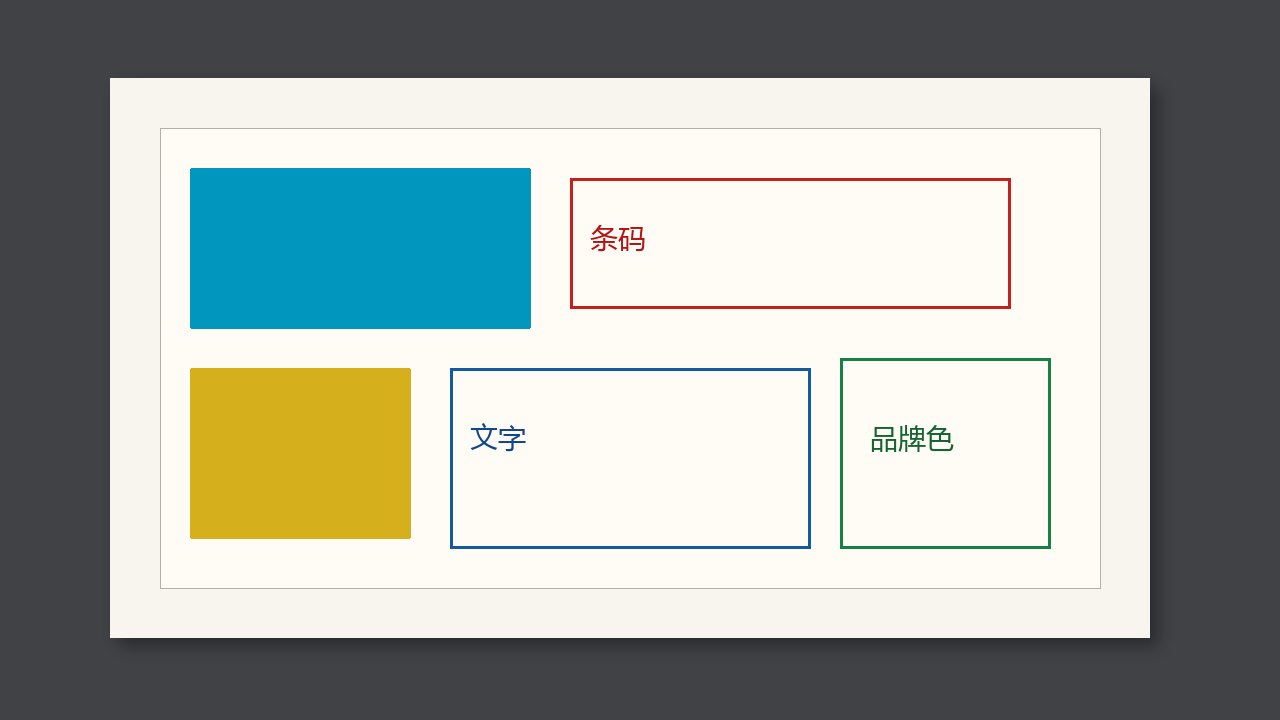
A region of interest is the piece that is actually judged. Different regions can use different thresholds. A label job usually needs 4 to 8 regions: barcode, brand colour, regulatory text, varnish or background, according to what this job really has to judge apart. One large box on the whole label compares places that should not be compared. One box on every character cannot be maintained.
Why they are separate
A barcode is judged on broken bars and the quiet zone. Brand colour is judged on colour difference or lightness against the template. Dirt on the background can use a looser threshold. Fine type has to be tight. In one box there is only one threshold: either the fine type is missed, or the background false-alarms. Variable numbers are drawn as their own ignore and sent to OCR.
Too many regions, and at a job change nobody can check that every box is still on the right content. Four to eight is the range most labels can maintain. A job with more independent requirements can add regions, but every region needs one sentence that says what it judges. A region you cannot say that for is not drawn.
One region, one job
| Region | It judges | Do not use it for |
|---|---|---|
| Barcode | Broken bars and the quiet zone | Colour |
| Brand colour | Lightness or a colour measurement | The same threshold as the background |
| Regulatory text | Missing or filled characters | An ignore |
| Variable number | Kept out of the comparison | Content, which goes to OCR |
Check at a job change
- Count the regions on this job and write one sentence for what each one is for.
- After the artwork moves, confirm each box still covers the original content.
- Put into each region one defect that region is meant to catch, and confirm only the matching region alarms.