What does ISO 13655 require of a spectrophotometer
Sheets under ISO 13655 use 45°:0° or 0°:45° geometry, and you write whether it is M0, M1, M2 or M3, white backing or black, and the aperture. Two instruments with different geometry are not used to accept each other. Polarisation is M3; it is not compared with a target that has no polariser.
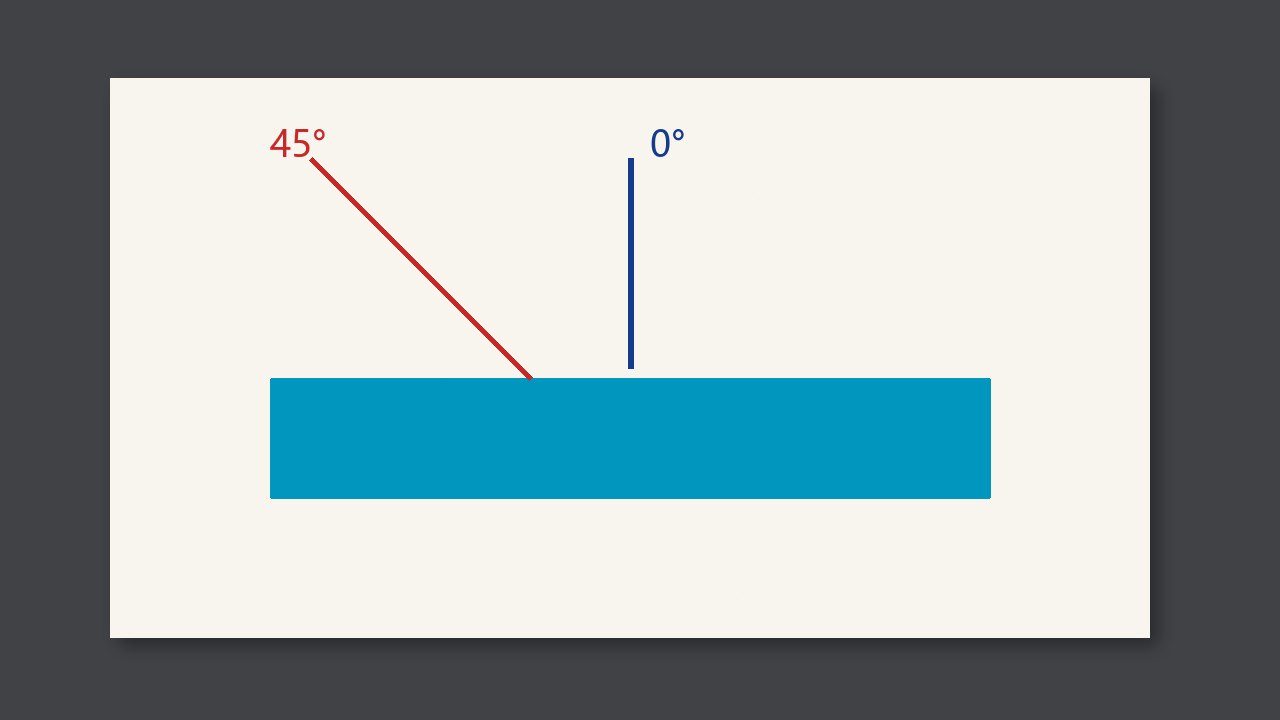
Sheets under ISO 13655 use 45°:0° or 0°:45° geometry, and you write whether it is M0, M1, M2 or M3, white backing or black, and the aperture. Two instruments with different geometry are not used to accept each other. Polarisation is M3; it is not compared with a target that has no polariser.
None of these can be missing
45° illumination and normal collection, or the reverse, keep gloss from shooting straight into the receiver. An integrating sphere collects light from all angles; a glossy ink will read another number. If the contract is 13655, press and lab both use the 45:0 family. One sphere and one 45:0 do not get to tell each other the other measured wrong.
M0 to M3 govern ultraviolet and polarisation, not angle. Backing governs whether the sheet shows the table. Aperture governs how large a patch you are looking into; a large aperture on a small patch pulls neighbouring colour in.
The report at least writes
| Item | If you omit it |
|---|---|
| 45:0 or 0:45 | A false colour difference against a sphere instrument |
| M0 to M3 | Fluorescence and wet-ink gloss mixed into the colour |
| Black or white backing | Thin-paper readings that follow the bench |
| Aperture | A small patch contaminated by the colour next to it |
Write it on the record
- Put geometry and aperture next to the instrument model.
- Match these four items before you compare numbers with the other party.
- If they do not match, stop comparing; do not average.